| site search by freefind |
- Home
- Bible Prophecy
- In the Last Days
- Everlasting Covenant
[If you purchase anything on this site, I may make a commission. Disclosure Policy]
Did God Make An
Unconditional Everlasting Covenant
With Abraham?
By Glenn Davis
Whether God made an everlasting covenant with Abraham may seem like ancient history which is not important today. Nothing could be further from the truth. The answer to that question can change a Christian's focus on the world right now. An entire area of theology, called Dispensationalism, centers around modern Jews and Israel. Even current political policy in the Middle East is influenced by this idea.

Sitemap -
Newsletter -
Statement Of Faith -
Donate
Follow us on social media for daily Scripture comments and more at MeWe, Facebook or YouTube.

Let us look at some of the key verses:
"On that day the LORD made a covenant with Abram and said, “To your descendants I give this land, from the Wadi of Egypt to the great river, the Euphrates—the land of the Kenites, Kenizzites, Kadmonites, Hittites, Perizzites, Rephaites, Amorites, Canaanites, Girgashites and Jebusites.” Gen. 15:18-21
"Abram fell facedown, and God said to him, “As for me, this is my covenant with you: You will be the father of many nations. No longer will you be called Abram; your name will be Abraham, for I have made you a father of many nations. I will make you very fruitful; I will make nations of you, and kings will come from you. I will establish my covenant as an everlasting covenant between me and you and your descendants after you for the generations to come, to be your God and the God of your descendants after you. The whole land of Canaan, where you now reside as a foreigner, I will give as an everlasting possession to you and your descendants after you; and I will be their God.” Gen. 17:3-8
This seems pretty plain and straightforward. God gave what is now known as the land of Israel to Abraham and his descendants in an everlasting covenant as an everlasting possession. What more is there to say?
Actually, as any Bible student knows, we always must examine context before arriving at a conclusion. Verses not only fit into immediate context, but also fit into their place in the context of the entire Bible. [We study this Abrahamic Covenant and the other covenants in The Love Covenants. This study is an excellent way to get the big picture of God's plan throughout the ages.]
Before we continue, we need to be aware of three traps that it is easy to fall into when studying Scripture, especially controversial passages:
1. It is easy to approach the Scripture with preconceived ideas. We all do this to some degree, but we must keep an open mind and search for what Scripture is saying, even if it contradicts our ideas. The danger is that our commitment to our own ideas of what Scripture says overrides what Scripture is really saying, and we only see what we want to see or expect to see. We must have humble and teachable spirits.
2. We can often assume a Western or modern understanding of the Scripture. In other words, misunderstandings can occur because we are not striving to look at it from the perspective from which it was written. We need to try to understand the Scripture from the point of view of the people who first heard/read it. In this case, we need to ask, how did Abraham understand the everlasting covenant?
3. We need to see the place of individual passages in the Grand Plan of God. Sometimes we are so busy studying a "tree" that we forget the forest in which it grows.
With this in mind, let us proceed. There is no doubt that God made an everlasting covenant with Abraham and that what is now called the land of Israel was a central part of that everlasting covenant. There are two vital questions that confront us regarding the above fact. Was the everlasting covenant unconditional, as many Christians today claim? And what does God mean by "everlasting"?
Was The Abrahamic Everlasting Covenant Unconditional?
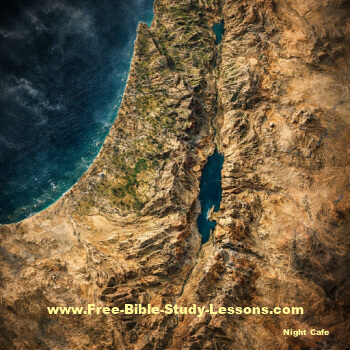
This is a major point in the Dispensational system of Bible interpretation. The idea is that the land of Israel was given to Abraham and his descendants forever unconditionally. In other words, no matter what they did or did not do, they could never lose their right to the land of Israel. It is this view, called Zionism, which seeks to support the Jews' right to the land of Israel regardless of the harm or oppression of the non-Jewish inhabitants. It uses whatever means - including influencing political policy - to achieve its ends. It tries [many times successfully] to get Christians on its side by claiming Biblical support. [It is not the purpose of this article to examine any other aspect of this issue other than whether it is Biblical or not.]
General Principles
Let's begin by looking at what the Bible teaches about God's promises in general, and then we will look at the Abrahamic Everlasting Covenant
specifically.
"If at any time I announce that a nation or kingdom is to be uprooted, torn down and destroyed, and if that nation I warned repents of its evil, then I will relent and not inflict on it the disaster I had planned. And if at another time I announce that a nation or kingdom is to be built up and planted, and if it does evil in my sight and does not obey me, then I will reconsider the good I had intended to do for it." Jer. 18:7-10
Here God declares a general principle about His Word. If God proclaims judgment and the nation/person being judged repents, then God may not bring the promised judgment. On the other hand, if God promises blessing and the nation/person receiving the blessing chooses to rebel, then the blessing may be withheld. This explains how God could proclaim judgment on Nineveh through Jonah [Jonah 3:4] and then, upon their repentance, not bring the judgment. This was a well-known principle, as Jonah himself testifies when he said that he knew God would be merciful [Jonah 4:1-2]. The general principle we discover is that all of God's promises are conditional on obedience.
"And without faith it is impossible to please God, because anyone who comes to him must believe that he exists and that he rewards those who earnestly seek him." Heb. 11:6
"...but the message they heard was of no value to them, because they did not share the faith of those who obeyed." Heb. 4:2
The second general principle is that God requires faith in order to receive what He has promised. We need to believe in the promises in order to inherit them.
So we see that at least two conditions are required to receive God's promises: faith and obedience. Without these, the promises of God are void. But, some will say, the covenant of Abraham was an exception. God gave it to Abraham unconditionally as an everlasting covenant. Anyone who makes such a statement has the burden of proof laid on them. In other words, it is their responsibility to prove, from Scripture, that God set aside His two foundational conditions. If they cannot do so, then we must assume the conditions apply as a normal method of God's dealings with men.
Keeping The Land Of Israel
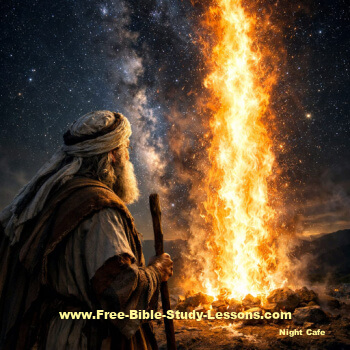
Fortunately, the Bible itself removes all doubt.
"Then God said to Abraham, “As for you, you MUST keep my covenant, you and your descendants after you for the generations to come. This is my covenant with you and your descendants after you, the covenant you are to keep: Every male among you shall be circumcised. You are to undergo circumcision, and it will be the sign of the covenant between me and you...My covenant in your flesh is to be an everlasting covenant. Any uncircumcised male, who has not been circumcised in the flesh, will be cut off from his people; he has broken my covenant.” Gen. 17:9-14
This Scripture follows immediately after the promise of the land as an everlasting possession. In fact, it is the same conversation! God gave Abraham conditions directly! There was no way Abraham could misunderstand the link between the fulfillment of the promise and the keeping of the conditions. The specific condition God gave Abraham, recorded at this time, was circumcision. If Abraham OR his descendants failed to keep this condition, they would forfeit the promise of the covenant. Notice that God not only made this everlasting covenant conditional, but He specifically said it was possible to break this covenant. How can this then be an unconditional covenant?
"However, if you do not obey the LORD your God and do not carefully follow all his commands and decrees I am giving you today, all these curses will come on you and overtake you...The LORD will send on you curses, confusion and rebuke in everything you put your hand to, until you are destroyed and come to sudden ruin because of the evil you have done in forsaking him. The LORD will plague you with diseases until he has destroyed you from the land you are entering to possess." Deut. 28:15, 20-21
"Just as it pleased the LORD to make you prosper and increase in number, so it will please him to ruin and destroy you. You will be uprooted from the land you are entering to possess." Deut. 28:63
"See, I set before you today life and prosperity, death and destruction. For I command you today to love the LORD your God, to walk in obedience to him, and to keep his commands, decrees and laws; then you will live and increase, and the LORD your God will bless you in the land you are entering to possess. But if your heart turns away and you are not obedient, and if you are drawn away to bow down to other gods and worship them, I declare to you this day that you will certainly be destroyed. You will not live long in the land you are crossing the Jordan to enter and possess." Deut. 30:15-18
When, about 400 years later, the promise to Abraham that his descendants would inherit the land was about to be fulfilled, Moses stressed to them that possessing and keeping the land was conditional on obedience to the laws of God. Even a person with only a casual acquaintance with the Old Testament can see how many times the nation of Israel violated the conditions of the everlasting covenant. In fact, the Old Testament is a shining example of God's grace and of how He will fulfill His purpose despite man's failure. [As a side note, some will say that they did break the covenant, God judged them and took them out of the land, then He promised that they would return to the land. That is true - which also means they acknowledge the covenant was conditional. God did promise a return to the land. However, EVERY promise of a return to the land was made BEFORE the end of the Babylonian Captivity - check it out - and was fulfilled when they returned to the land at the end of the Babylonian Captivity. After that time, there is no promise of a return to the land should they lose it again...as they did in AD 70.]
But Wasn't It An
Everlasting Covenant Possession?
To answer that question, we need to look at what God means by a term, not what we assume it means. When we automatically define "everlasting covenant" with our preconceived ideas, we miss what is being said. In fact, if we stop to think about it, we realize that no orthodox Christian really believes that the Jews are going to live in the land of Israel forever. One of the foundational beliefs of the Christian is the Second Coming of Christ. At that time the present earth will be dramatically changed. Nothing on this physical earth can be everlasting. Only that which is of the Spirit is truly eternal.
"So we fix our eyes not on what is seen, but on what is unseen, since what is seen is temporary, but what is unseen is eternal." 2 Cor. 4:18
"The spiritual did not come first, but the natural, and after that the spiritual." 1 Cor. 15:46
The physical land of Israel was a central part of the Abrahamic Covenant and could be enjoyed by the descendants of Abraham as long as they kept the everlasting covenant. However, as with many things in the Old Testament, the land of Israel was a picture of what God would do in the New Covenant. The land of Israel, flowing with milk and honey, is a picture or type of what God has promised the Christian in Christ Jesus. It is a spiritual land. It is not the picture which is eternal, but the real thing which was being illustrated with the picture which is eternal. What we have in Christ can never be lost even when we pass through death or the Lord returns. People get confused and err when they mix the type with the antitype [fulfillment].
How Did Abraham
Understand The Covenant?

We may wonder whether God was deceitful toward Abraham by promising him the land in an everlasting covenant, even as He was using the land as a type of the spiritual possession of Christians in the final covenant, the New Covenant.
"By faith Abraham, when called to go to a place he would later receive as his inheritance, obeyed and went, even though he did not know where he was going...For he was looking forward to the city with foundations, whose architect and builder is God." Heb. 11:8, 10
Abraham knew the ultimate promise of the everlasting covenant was spiritual; the city would be built by God. He understood the physical land was temporary and conditional, but that it pictured the far greater work that God would one day do. He, as did all the Old Testament true believers, looked forward to the time of the New Covenant.
We, as Christians, have the fulfillment of what Abraham longed for! Why do so many Christians want to go back to the old? If crying is possible in heaven, Abraham is probably weeping at those who abandon the true riches of God for carnal and fleshly interpretations of Scripture.

Glenn Davis is a Christian author and Bible teacher whose work draws on more than 40 years of study, writing, and teaching in local churches. He has written 700+ articles, created five Bible courses, published three books, and shared 300+ Bible videos on YouTube. Readers can find his books on Amazon, follow his teaching on YouTube or visit Glenn Davis Books. Away from the keyboard, he enjoys time with family, reading, walking, and board or card games.
Follow us on social media for daily Scripture comments and more at MeWe, Facebook or YouTube.
Sitemap -
Newsletter -
Statement Of Faith -
Donate
Sign up for our free monthly newsletter or take one of our free Bible Study courses.
Please note: We no longer have the commenting feature [maybe again in the future]. Joshua Institute students who have questions or comments on their courses can use the contact button and mention the course name and lesson number in the email. Thank you. Glenn

You might like these
The Kingship of Christ
Are we yielded to the kingship of Christ, or do we pursue our will in His name? The Father will accept no excuses for disobedience.
The War Of God
Earth has been invaded. The war of God over the past 6,000 years has been to drive this destructive and cruel enemy from the planet…and even the universe.
A Disciple Of Jesus
Jesus never called anyone except disciples. Followers and fans are not for the Kingdom of God. We are each to be a disciple of Jesus.
What Does The Bible Say About Women Leaders?
A few passages in the Bible have been used to keep women out of leadership and teaching positions. What does the Bible say about women leaders?
Why Do Humanists Rule Over Christians?
Have you ever wonder why, if God is in control, humanists rule to the destruction of society?
Unity In Christ
God is bringing all things into unity in Christ.
Jesus Said Do Not Resist Evil
What did He mean when Jesus said, "Do not resist evil"? Are we commanded to step back and let wicked people abuse us and others? Discover the truth.
The Garden Of Eden: All Five Of Them
The Biblical theme of the Garden of Eden can be traced throughout the Scriptures. AI artwork by recraft.
Why Praise And Worship?
Why do we praise and worship God? Does He need it? Do we?
Unique Christians Or Box Store Christians?
Sometimes we have a box store mentality, but we are unique Christians.











Privacy - Disclosure
Copyright © 2004–