| site search by freefind |
- Home
- Free Bible Courses
- Persecution Christian
- Persecution Christian
[If you purchase anything on this site, I may make a commission. Disclosure Policy]
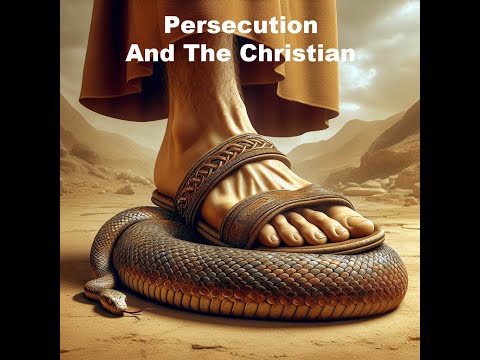
Persecution And The Christian
Lesson Two
By Glenn Davis
Welcome back. I trust the first lesson was helpful for you.
For Lesson Two, read the following sections in your Textbook and do the questions below. The questions are in chronological order.

Sitemap -
Newsletter -
Statement Of Faith -
Donate
Follow us on social media for daily Scripture comments and more at MeWe, Facebook or YouTube.
Read pages 34 - 42 and answer the associated questions. If you are using the PDF version of the textbook, I suggest you make a 'copy' so you can highlight in it. You may write the answers to the questions below in a notebook or in a computer file. You may also print them off here and work from a 'hard' copy. God bless.
Lesson Two Questions
The Example Of History: Insights From The Historical Books
The Old Testament View Of History
1. E. A. Speiser makes the keen observation that the Bible is not so much a chronicle of events and thoughts worth recording as it is an ____________________ of significant happenings. pg. 34
2. The Mesopotamian cultures saw history as a ___________________ meandering, subject to the whims of capricious, untrustworthy gods who might turn on them at any moment. pg. 35
3. The collapse of the Assyrian and Babylonian empires was due not so much to the superiority of their enemies as it was to the crushing weight of their ____________________ structure while they sought to find form and security within the chaos of their worldview. pg. 36
4. The Egyptians, on the other hand, held to a ____________________ view of history. pg. 36
5. The word of the Pharaoh became ____________________ as soon as the words were spoken. pr. 36
6. Israel’s law was from a ____________________, covenant-making God whose character and will was reflected in the law. pg. 38
7. In later times, the Jews would encounter the view of the Greeks who tended to see history as moving forward and ___________________. pg. 38
8. The call to the sufferer is to ____________________ the distress to One who is mightier and who understands all things. pg. 39
Suffering As Discipline
Discipline As Punishment
9. The Israelites understood that suffering could be the catalyst for their ____________________ from sin and its consequences. pg. 40
Discipline As A Means Of Spiritual Maturity
10. Discipline gives the assurance of ____________________, seeking to create in the life of the child a God-centered way of life that reflects itself in obedience and ethical behavior. pg. 40
Suffering Specifically For God’s Sake
11. The Old Testament historical books also record incidents of what we most commonly understand as persecution: suffering for doing what is ____________________, or more specifically, because of one’s allegiance to the living God. pg. 41
Assignment
1. Memorize Daniel 6:10.
2. Do a Devotional Meditation on Daniel 6.
Return to Lessons.
For more information about Glenn Davis, see our About Glenn page or visit Glenn Davis Books.

Glenn Davis is a Christian author and Bible teacher whose work draws on more than 40 years of study, writing, and local church teaching. He has written 700+ articles, created five Bible courses, published three books, and shared 100+ Bible videos on YouTube. Readers can find his books on Amazon, follow his teaching on YouTube or visit Glenn Davis Books. Away from the keyboard, he enjoys time with family, reading, walking, and board or card games.
Follow us on social media for daily Scripture comments and more at MeWe, Facebook or YouTube.
Sitemap -
Newsletter -
Statement Of Faith -
Donate
Sign up for our free monthly newsletter or take one of our free Bible Study courses.
Please note: We no longer have the commenting feature [maybe again in the future]. Joshua Institute students who have questions or comments on their courses can use the contact button and mention the course name and lesson number in the email. Thank you. Glenn

You might like these
Living With Disappointment
What can we learn from Sarah about living with disappointment in life? She had her family hopes dashed as she went childless for 89 years.
Courage Under Siege
When there are no good choices, Godly courage makes the right choice often at great risk. Consider Rahab's story.
God Loves A Willing Heart
Mary, the mother of Jesus, beautifully illustrates that God loves a willing heart. Her thoughtful acceptance of God's will for her life is a great example for all of us.
God Sees, God Cares
The history of Hagar shows us that God sees and God cares.
Mary Mother Of Jesus
What does the Bible reveal to us about Mary mother of Jesus and what lessons can we learn from her life?
No Miracle Received
One little unnamed girl shows us the way when we receive no miracle from God.
Rebekah
Rebekah is another great Biblical woman who, like all of us, had strengths and weakness and from whose life we can learn a lot.
Jael
The story of Jael, God's female assassin.
Women Of Faith
Who were some great women of faith? From ancient to modern history they stand out as shining examples in their love for God.
The Greatest Gift
Have you every felt unappreciated by God? Do you think what you do doesn't matter? Read about a woman who felt the same until...











Privacy - Disclosure
Copyright © 2004–